Table of Contents
- Is Nordic Naturals Third-Party Tested?
- What Does Third-Party Testing Actually Mean?
- What Does Nordic Naturals Test For?
- Why Oxidation Testing Matters for Fish Oil
- What Is a Nordic Naturals Certificate of Analysis?
- How to Find a Nordic Naturals COA
- Are Nordic Naturals Products NSF Certified?
- What Does NSF Certified for Sport Mean?
- Are Nordic Naturals Manufacturing Facilities Certified?
- Does Nordic Naturals Use IFOS Testing?
- What About Friend of the Sea Certification?
- Why Third-Party Testing Matters More for Supplements
- Does Third-Party Testing Prove a Supplement Works?
- Does Third-Party Testing Mean Zero Heavy Metals?
- What Should You Look for on a Fish Oil COA?
- Third-Party Tested vs. Third-Party Certified
- How Nordic Natur Compares With Other Fish Oil Brands
- Should Athletes Choose the Sport Versions?
- Is Nordic Naturals 3rd Party Testing Reliable?
- Final Thoughts
Third-party testing has become one of the most important factors people consider when choosing supplements, especially fish oil. Because omega-3 products can vary in purity, freshness, potency, and contaminant levels, consumers often want more than the claims printed on the bottle.
That leads to a common question: does Nordic Naturals use third-party testing?
Yes. Nordic Naturals states that its products undergo testing to confirm purity, potency, and freshness, and the company works with third-party certified laboratories for certain analyses. Additionally, customers can look up Certificates of Analysis, or COAs, for individual products using their lot numbers.
However, “third-party tested” does not necessarily mean that every Nordic Naturals product carries the same independent certification seal. Some products, particularly in the Sport line, have specific NSF certifications, while others rely on laboratory testing and lot-specific documentation.
Therefore, understanding the difference between testing, certification, and a Certificate of Analysis helps consumers evaluate Nordic Naturals more accurately.
Is Nordic Naturals Third-Party Tested?
Nordic Naturals says that every product undergoes testing to verify important quality characteristics.
These include:
- Purity
- Potency
- Freshness
- Ingredient quality
- Environmental contaminants
The company also says it partners with third-party certified laboratories to check for contaminants such as heavy metals.
This matters especially for fish oil.
Fish naturally encounter contaminants in the environment, and oils can also oxidize over time. Therefore, a quality-control program should look beyond the omega-3 amount printed on the label.
Instead, testing should examine whether the product contains the promised EPA and DHA levels while also checking for unwanted contaminants and oxidation.
As a result, Nordic Naturals emphasizes both purity and freshness in its testing program.
What Does Third-Party Testing Actually Mean?
Third-party testing means an outside laboratory evaluates a product or ingredient rather than relying exclusively on the manufacturer’s internal testing.
That separation can increase confidence because the laboratory operates independently from the brand selling the supplement.
However, third-party testing can take several forms.
For example, a company may send batches to an outside laboratory for contaminant testing.
Alternatively, a certification organization may independently evaluate the product against a defined standard.
Those are related processes, but they are not identical.
Therefore, shoppers should avoid treating every phrase such as “independently tested,” “third-party tested,” and “third-party certified” as interchangeable.
Nordic Naturals uses external laboratory testing, while selected products also carry formal third-party certifications.
What Does Nordic Naturals Test For?
Nordic Naturals focuses heavily on four areas: purity, potency, freshness, and absorption.
For fish oil products, purity testing matters because marine oils can potentially contain environmental contaminants.
Therefore, testing may examine substances such as:
- Mercury
- Lead
- Cadmium
- Arsenic
- PCBs
- Dioxins
- Other environmental contaminants
Additionally, potency testing verifies whether the active ingredients match the amount listed on the label.
For an omega-3 supplement, that can include EPA and DHA levels.
Consequently, a bottle advertising a specific omega-3 concentration should contain an amount consistent with that claim.
Freshness testing adds another important layer.
Fish oil can oxidize when exposed to oxygen, heat, or light. Therefore, high-quality omega-3 testing often includes oxidation measurements.
Why Oxidation Testing Matters for Fish Oil
Fish oil consists largely of polyunsaturated fatty acids.
These fats provide important nutritional value, but they can also oxidize relatively easily.
Therefore, freshness becomes particularly important for omega-3 supplements.
Oxidized oils may develop unpleasant odors and tastes. Moreover, oxidation can reduce the product’s overall quality.
Laboratories often evaluate fish-oil oxidation using measurements such as peroxide value and anisidine value.
Testers may also calculate a combined measurement known as TOTOX.
These numbers help manufacturers determine whether an oil remains within accepted freshness specifications.
Consequently, fish-oil testing involves more than checking for mercury.
A product can have low contaminant levels and still perform poorly if the oil has significantly oxidized.
What Is a Nordic Naturals Certificate of Analysis?
A Certificate of Analysis, commonly called a COA, summarizes testing information for a product or batch.
Nordic Naturals allows customers to search for COAs using the lot number printed on their product.
This lets consumers review information specific to the production lot they purchased, rather than relying only on general marketing statements.
- Potency
- Purity
- Freshness
- Contaminant limits
- Product specifications
This level of transparency can help consumers compare supplements more carefully.
Moreover, lot-specific information matters because supplement production occurs in batches.
Testing one historical sample does not tell you everything about every bottle produced years later.
Consequently, checking a specific lot offers more useful information than a single generic laboratory report.
How to Find a Nordic Naturals COA
The process is relatively simple.
First, locate the lot number on your bottle or package.
Then, use Nordic Naturals’ online Certificate of Analysis lookup.
Enter the lot information and see the corresponding report.
Additionally, newer Nordic Naturals packaging may include a QR code that directs consumers toward product testing information.
So you don’t necessarily need to contact customer support every time you want to check testing documentation.
However, the amount of information shown can vary by product and report.
If something seems unclear, consumers can contact the company for additional clarification.
Are Nordic Naturals Products NSF Certified?
Some are.
This distinction matters because Nordic Naturals’ general third-party testing program does not mean that every product carries NSF product certification
NSF currently lists several Nordic Naturals products under its dietary supplement and Certified for Sport programs.
Examples include certain products from the Sport range, such as versions of:
- Ultimate Omega-D3 Sport
- Ultimate Omega 2X Sport
- Vitamin C Gummies Sport
- Vitamin D3 Gummies Sport
- Nordic CoQ10 Ubiquinol Sport
Therefore, athletes should check the exact product rather than assuming that every Nordic Naturals bottle has Certified for Sport status.
Certification applies to specific listed products.
What Does NSF Certified for Sport Mean?
NSF Certified for Sport targets athletes who need additional assurance about banned substances and supplement quality.
Products in the program undergo testing and evaluation under the certification requirements.
Therefore, the certification can become especially valuable for competitive athletes who must comply with anti-doping rules.
However, ordinary consumers do not necessarily need every supplement they buy to carry a sport certification.
The broader value lies in understanding what the seal represents.
A third-party certification seal means an independent organization has evaluated the product against its specific program requirements.
Consequently, certification differs from a company simply stating that it sent samples to an independent laboratory.
Are Nordic Naturals Manufacturing Facilities Certified?
Nordic Naturals also has manufacturing operations listed under NSF Good Manufacturing Practices standards.
GMP certification focuses on manufacturing systems rather than proving that every individual product holds the same product-level certification.
This distinction matters.
Good Manufacturing Practices address issues such as:
- Quality-control procedures
- Manufacturing processes
- Warehousing
- Packaging
- Documentation
- Facility operations
Therefore, facility certification provides additional information about how supplements get manufactured.
However, it should not be confused with Certified for Sport or individual product certification.
A company can operate a GMP-certified facility without every product carrying an NSF Certified for Sport seal.
Does Nordic Naturals Use IFOS Testing?
Consumers often associate fish-oil testing with IFOS, or the International Fish Oil Standards program.
However, people should verify current certification directly rather than assuming that every respected fish-oil company belongs to that particular program.
Nordic Naturals emphasizes its own batch testing, third-party certified laboratories, Certificates of Analysis, NSF certifications for selected products, and other quality systems.
So the presence or absence of one certification program should not be the only measure of quality.
Instead, look at the total evidence available.
That includes contaminant testing, oxidation data, potency verification, manufacturing standards, and lot-specific documentation.
What About Friend of the Sea Certification?
Nordic Naturals also highlights Friend of the Sea certification for its fish oils.
However, Friend of the Sea certification addresses sustainability, not supplement purity or potency.
It focuses on responsible fisheries and sourcing.
Therefore, consumers should not mistake a sustainability logo for a laboratory testing certification.
Both can provide useful information, but they answer different questions.
Third-party testing asks whether the supplement meets certain quality specifications.
Meanwhile, sustainability certification asks how responsibly the raw marine resources were sourced.
Consequently, a well-evaluated fish oil may involve several separate certifications or verification systems.
Why Third-Party Testing Matters More for Supplements
Dietary supplements do not go through the same premarket approval process as prescription drugs.
In the United States, manufacturers generally are responsible for ensuring supplements meet safety and labeling requirements.
Therefore, independent testing can provide an additional layer of assurance.
It can help answer several practical questions.
Does the product actually contain the ingredient amount listed on the label?
Does it contain unacceptable levels of contaminants?
Has the fish oil remained fresh?
Does the manufacturing process follow appropriate quality procedures?
As a result, consumers often look for COAs and independent certification when comparing supplement brands.
Does Third-Party Testing Prove a Supplement Works?
No.
This distinction is extremely important.
Third-party testing can help confirm what is in the bottle.
However, it does not automatically prove that the supplement will deliver a particular health benefit for every person.
For example, laboratory testing might confirm that a fish oil contains the listed amount of EPA and DHA and stays within contaminant specifications.
However, that testing does not prove that everyone who takes it will experience the same result.
Clinical effectiveness depends on the nutrient, dose, individual health status, diet, medications, and reason for supplementation.
Therefore, testing quality and clinical effectiveness represent two separate questions.
A high-quality supplement can still be unnecessary for someone who does not need it.
Does Third-Party Testing Mean Zero Heavy Metals?
Not necessarily.
Laboratory results often involve detection limits and maximum allowable specifications, not a guarantee that a substance does not exist at any imaginable concentration.
Trace amounts of metals naturally occur throughout the environment.
Therefore, the more useful question involves whether testing detects contaminants above accepted limits.
Nordic Naturals states that it tests for environmental contaminants and uses purification methods designed to reduce unwanted substances.
Consequently, consumers should evaluate the actual specification or COA rather than interpreting phrases such as “pure” as meaning scientifically absolute zero.
What Should You Look for on a Fish Oil COA?
If you want to evaluate a fish-oil supplement carefully, look beyond one number.
First, check potency.
Make sure the EPA and DHA levels align with the product label.
Next, review contaminant testing.
Pay attention to heavy metals and persistent environmental pollutants.
Then, examine freshness or oxidation information when available.
Also, confirm that the lot number on the COA matches your bottle.
Finally, check the date and product identity.
These simple steps can prevent confusion between reports from different formulations or batches.
Third-Party Tested vs. Third-Party Certified
This difference deserves repeating because supplement marketing often blurs the two phrases.
Third-party tested usually means an independent laboratory analyzed some aspect of the product.
Third-party certified means an independent certification body evaluated the product according to a defined certification program.
Therefore, certification generally involves more formal ongoing requirements.
Nordic Naturals uses third-party laboratory testing across its product line, according to the company’s current quality information.
Meanwhile, only specific products appear under programs such as NSF Certified for Sport.
So check the bottle for the exact certification you need.
How Nordic Natur Compares With Other Fish Oil Brands
When comparing fish-oil brands, avoid judging quality by price alone.
Instead, compare transparency.
A stronger quality-control program should make it relatively easy to find information about:
- EPA and DHA potency
- Heavy-metal testing
- PCBs and other contaminants
- Oxidation
- Manufacturing standards
- Batch or lot identification
- Certificates of Analysis
- Independent certifications
Nordic Naturals does a good job of making lot-specific COAs available.
Additionally, selected Sport products have independent NSF listings.
However, consumers should still compare individual products because formulations, certifications, doses, and prices differ widely across brands.
Therefore, no single fish oil is best for everyone.
Should Athletes Choose the Sport Versions?
Competitive athletes have an additional concern: banned substances.
Therefore, a product carrying a recognized sports certification can provide extra reassurance.
Nordic Naturals offers several Sport products that appear in NSF’s Certified for Sport listings.
Consequently, athletes subject to anti-doping rules may prefer one of those products over a similar non-Sport formulation.
However, always verify the exact product name and current certification status.
Do not assume NSF’s a standard product automatically carries the certification because a similar Sport version does.
Is Nordic Naturals 3rd Party Testing Reliable?
Nordic Naturals has several positive quality-control indicators.
The company provides lot-specific Certificates of Analysis, states that it uses third-party certified laboratories, maintains NSF-listed manufacturing facilities, and offers selected products with NSF product certifications.
Moreover, its fish-oil quality program addresses both contaminants and freshness, which matters because oxidation remains a key factor in omega-3 quality.
However, consumers should still understand the limitations.
Third-party testing does not mean every product has the same certification.
Likewise, testing cannot guarantee that a supplement will provide a particular health outcome.
So the best way to evaluate Nordic Naturals is to look at the specific product, its lot-specific COA, its certification status, its dose, and whether the formulation matches your needs.
Final Thoughts
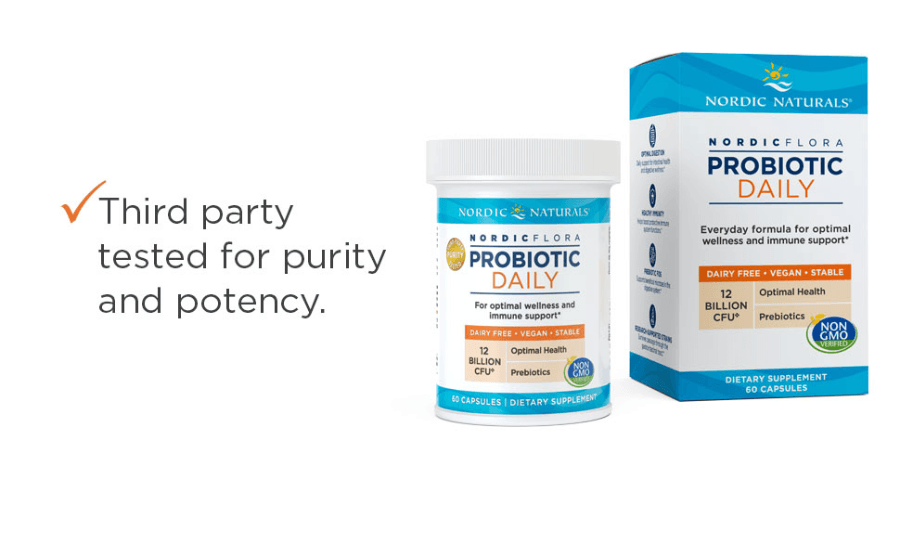
Nordic Naturals does use third-party testing, and the company provides more transparency than simply printing a purity claim on the bottle.
Its products undergo testing for purity, potency, and freshness, and Certificates of Analysis let consumers check lot-specific results. Additionally, selected Sport products carry NSF certifications, and Nordic Naturals manufacturing facilities appear under NSF Good Manufacturing Practices programs.
However, not every Nordic Naturals product carries NSF Certified for Sport status.
Therefore, consumers should distinguish between general third-party laboratory testing and formal product certification.
For fish oil in particular, check more than mercury. Look at EPA and DHA potency, environmental contaminants, oxidation measurements, manufacturing standards, and the batch-specific COA.
Ultimately, the biggest advantage of Nordic Naturals’ testing approach is transparency. Consumers can investigate the testing information attached to the actual product they purchased rather than relying entirely on broad brand claims.
That doesn’t automatically make every Nordic Naturals supplement necessary for everyone. For consumers comparing supplement quality, third-party testing, batch documentation, and independent certification provide useful evidence