Table of Contents
- Is Aqualyx FDA Approved in the United States?
- What Is Aqualyx?
- What Are the Risks of Aqualyx Injections?
- Is There an FDA-Approved Alternative to Aqualyx?
- How Can You Check Whether a Fat-Dissolving Injection Is FDA Approved?
- What Should You Ask Before Getting Fat-Dissolving Injections?
- Is Aqualyx Worth the Risk?
- Final Verdict: Is Aqualyx FDA Approved?
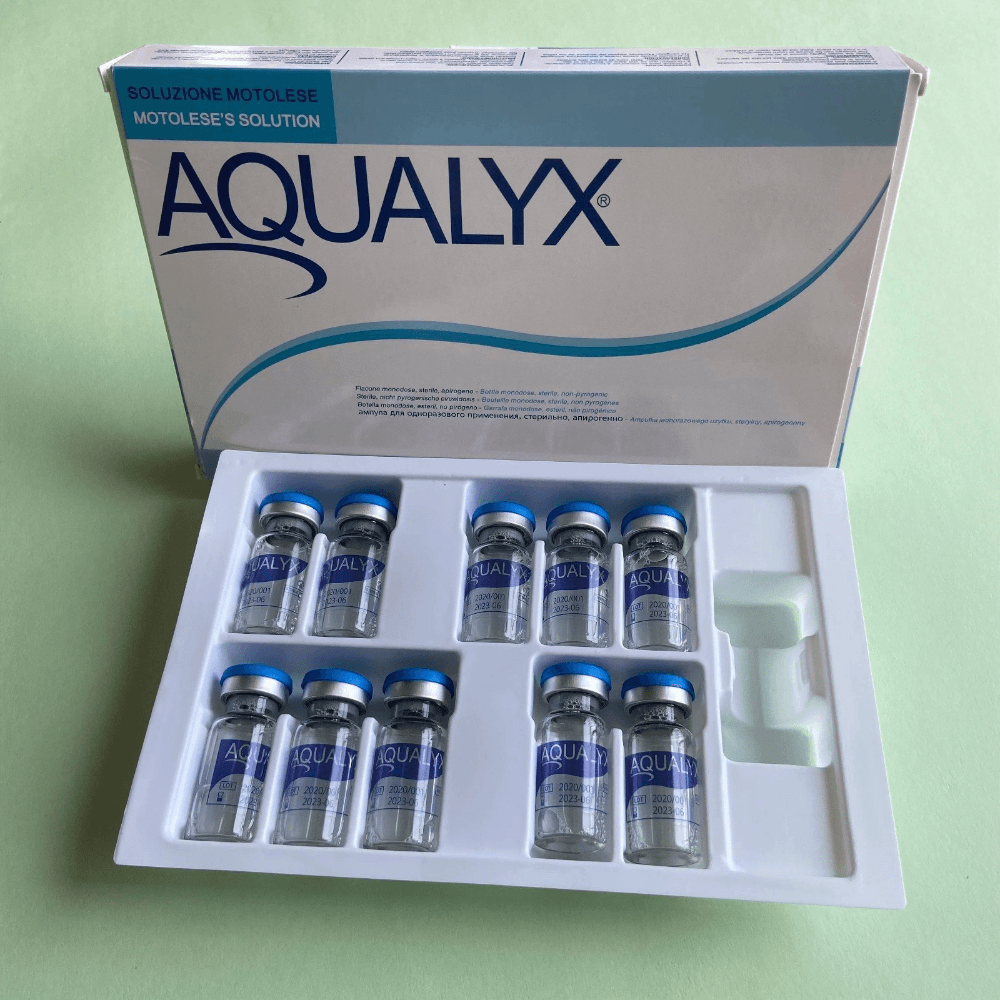
If you are considering Aqualyx for fat reduction, you may wonder whether the U.S. Food and Drug Administration (FDA) has approved the treatment. The short answer is no. Aqualyx is not FDA-approved in the United States. The FDA specifically lists Aqualyx among the fat-dissolving injectable products that lack its approval and warns consumers about potential complications from these treatments.
Aqualyx is marketed as a nonsurgical treatment for localized fat deposits. It aims to reduce fat in areas such as the chin, abdomen, thighs, and arms. However, its availability in aesthetic clinics or its use in other countries does not establish FDA approval in the United States.
Instead, the FDA identifies Kybella (deoxycholic acid) as an approved injectable treatment for reducing fat beneath the chin in adults. Kybella also has important limitations and potential risks, so approval does not mean every fat-dissolving injection is safe for everyone.
In this guide, we will explain Aqualyx’s FDA approval status, how the treatment works, its potential risks, how it compares with approved alternatives, and what you should know before considering any injectable fat-reduction procedure.
Is Aqualyx FDA Approved in the United States?
No. Aqualyx is not FDA-approved for fat reduction in the United States. The FDA includes Aqualyx among the brands that market and sell unapproved fat-dissolving injections.
This distinction matters because FDA approval involves a review of a drug’s safety, effectiveness, manufacturing quality, and intended use. Therefore, a product cannot claim FDA approval simply because a clinic offers it or a practitioner has experience using it.
What the FDA Says About Aqualyx
The FDA warns consumers that unapproved fat-dissolving injections can cause harmful reactions. Its guidance specifically names Aqualyx alongside other products marketed for reducing fat deposits in areas such as the chin, back, thighs, upper arms, and stomach.
The agency also explains that these products may contain ingredients such as phosphatidylcholine or sodium deoxycholate. However, ingredient similarities do not mean different products have the same safety profile or work equally well.
The FDA has also received reports of complications involving unapproved fat-dissolving injections. These include persistent skin problems, painful reactions, scarring, and infections.
Consequently, consumers should not assume that Aqualyx has undergone the same review as an FDA-approved prescription drug.
Does FDA Approval Differ From Approval in Other Countries?
Yes. Regulatory approval varies by country, and a product’s legal status in one market does not automatically apply elsewhere.
Aqualyx has been marketed for cosmetic fat reduction in certain countries outside the United States. However, check claims about its availability, registration, or acceptance in a particular country with that country’s regulatory authority.
For example, a clinic might describe a product as approved, registered, or legally available in its local market. Those terms do not necessarily mean that the FDA has approved it.
Therefore, if you live in the United States, check the FDA’s official information rather than relying solely on a manufacturer’s claims or a clinic’s promotional material.
What Is Aqualyx?
Aqualyx is an injectable product marketed for reducing localized fat deposits. Practitioners generally describe the treatment as injection lipolysis, a procedure that uses injections to damage fat cells in a targeted area.
Unlike traditional liposuction, the procedure does not involve surgically removing fat through a cannula. Instead, the treatment aims to break down fat cells so the body can process the resulting cellular material.
However, the absence of surgery does not automatically make a treatment safe. Injectable procedures can cause tissue damage, inflammation, infection, and other complications, particularly when practitioners use products without appropriate authorization or training.
How Does Aqualyx Work?
Aqualyx is marketed as a treatment that disrupts fat cells in localized areas. The resulting tissue response may lead to swelling and inflammation around the injection sites.
The body then processes the damaged cellular material over time. Nevertheless, results can vary by treatment area, individual, technique, and other factors.
It is also important to distinguish a product’s proposed mechanism from proven clinical effectiveness. A treatment may have a plausible explanation for how it works, but that alone does not demonstrate that it delivers predictable results or that its benefits outweigh its risks.
Because Aqualyx lacks FDA approval, consumers should not interpret marketing claims as evidence that the product has met the FDA’s standards for safety and effectiveness.
Which Areas Does Aqualyx Target?
Clinics that offer Aqualyx may promote it for localized fat deposits in several body areas, including:
- Under the chin and along the jawline.
- The abdomen and waist.
- The thighs.
- The upper arms.
- Other areas with small, localized fat deposits.
However, these marketed uses do not establish that Aqualyx is safe or effective for each area. Different body regions contain different nerves, blood vessels, and other structures so that injection risks can vary considerably.
Furthermore, reducing a small fat deposit is not the same as treating obesity or achieving substantial weight loss. Aqualyx should not be viewed as a substitute for comprehensive weight management.
What Are the Risks of Aqualyx Injections?
One key consideration is that Aqualyx has not undergone the FDA approval process for fat reduction in the United States. As a result, consumers should be cautious about claims that it offers a proven, low-risk alternative to established procedures.
The FDA warns that unapproved fat-dissolving injections can cause serious complications. In addition, poor injection technique and unsafe practices may increase the risk of injury.
Common Injection-Related Reactions
Injectable fat-reduction procedures can cause local reactions around the treatment area. Depending on the product and technique, these may include:
- Swelling and tenderness.
- Pain or discomfort.
- Bruising and redness.
- Firmness or lumps beneath the skin.
- Inflammation around injection sites.
Some reactions may improve as the tissue heals. Nevertheless, persistent lumps, worsening pain, or significant skin changes require medical evaluation.
Individual patient experiences do not establish a product’s overall safety. A practitioner who has seen several successful treatments cannot reliably determine the frequency of rare or serious complications without appropriate clinical evidence.
More Serious Potential Complications
The FDA has warned that unapproved fat-dissolving injections can cause complications beyond temporary swelling or bruising. Reported problems involving these products include infections, scarring, and persistent skin damage.
Furthermore, improper injection technique can increase the risk of tissue injury. Injecting into the wrong location or using an unsuitable product can cause complications that require additional treatment.
The exact risks associated with a particular Aqualyx formulation may depend on its ingredients, the treatment area, the injection technique, and the individual patient’s circumstances. However, consumers should not assume that these uncertainties make the risks insignificant.
What Should You Do if You Experience a Reaction?
If you have already received Aqualyx injections and develop severe or worsening pain, spreading redness, fever, skin discoloration, an open wound, or rapidly increasing swelling, seek prompt medical assessment.
Additionally, seek urgent care for symptoms such as difficulty breathing, facial or throat swelling, or other signs of a serious allergic reaction.
If possible, keep the product packaging and any treatment records. These details may help a healthcare professional identify what you received and assess the complication.
Do not attempt to inject additional product, drain lumps yourself, or treat a suspected infection without professional guidance.
Is There an FDA-Approved Alternative to Aqualyx?
Yes. The FDA has approved Kybella (deoxycholic acid) for improving the appearance of moderate to severe fullness associated with submental fat in adults. Submental fat refers to the fat beneath the chin, commonly associated with a double chin.
However, Kybella’s approval applies to a specific product and treatment area. It does not establish that all deoxycholic acid products are approved or that the treatment is appropriate for other parts of the body.
What Is Kybella?
Kybella is a prescription injectable medicine that contains deoxycholic acid. The medicine damages fat cells in the treated area, allowing the body to process the resulting cellular material.
The FDA approved Kybella in 2015 for adults with moderate to severe fullness associated with fat beneath the chin. A generic deoxycholic acid injection product also has FDA approval.
Nevertheless, the FDA does not recommend using Kybella to treat fat outside the submental region. Its current prescribing information also warns about potentially serious complications, including nerve injury, difficulty swallowing, tissue damage, and persistent injection-site lumps or masses.
Therefore, even with an approved treatment, discuss the benefits and risks with a qualified healthcare professional.
Aqualyx vs. Kybella
The two products differ in their regulatory status in the United States.
| Feature | Aqualyx | Kybella |
|---|---|---|
| FDA approval for fat reduction in the U.S. | No | Yes, for submental fat in adults |
| Product category | Marketed fat-dissolving injectable | Prescription deoxycholic acid injection |
| Approved treatment area | No FDA-approved indication | Fat beneath the chin |
| FDA-reviewed safety and effectiveness for the indicated use | No FDA approval for Aqualyx | Yes, for the approved indication |
| Important consideration | Unapproved product risks and uncertain evidence | Approved use still carries significant risks |
The central difference is not simply that one product is more popular or more widely available. Instead, Kybella has undergone the FDA’s review process for its specific indication, while Aqualyx has not received FDA approval for fat reduction.
However, this comparison does not mean that Kybella guarantees satisfactory results or carries no risks. Your suitability depends on your health, anatomy, expectations, and a professional assessment.
How Can You Check Whether a Fat-Dissolving Injection Is FDA Approved?
Before paying for an injectable cosmetic procedure, verify the product’s regulatory status independently. This step matters most when clinics advertise dramatic results or describe a product as medically approved.
Search the FDA’s Official Databases
The FDA recommends using its Drugs@FDA database and the Orange Book to check a drug product’s approval status.
Start by searching for the exact product name. Then check the active ingredient, manufacturer, approved indication, and prescribing information.
If a clinic claims that Aqualyx has FDA approval, ask for the specific FDA approval information supporting that statement. A product brochure, foreign registration certificate, or online retailer listing does not substitute for an FDA drug approval.
Moreover, verify that the approval applies to the actual product being offered. A medicine containing an ingredient used in an approved drug does not automatically receive the same approval.
Be Careful With Marketing Claims
Cosmetic treatment advertising can make products sound safer or more effective than the available evidence supports. For instance, a clinic might describe a treatment as natural, minimally invasive, clinically proven, or medically approved.
However, these phrases have different meanings. A treatment can be minimally invasive without having FDA approval, and a study involving one formulation does not automatically validate another.
Similarly, testimonials and before-and-after photographs cannot establish how often a treatment causes complications or whether it outperforms alternatives.
Therefore, request clear information about the exact product, its regulatory status, the evidence supporting its use, and the practitioner’s qualifications.
What Should You Ask Before Getting Fat-Dissolving Injections?
If you are considering Aqualyx or another injectable treatment, ask questions before agreeing to the procedure.
Questions About the Product
First, ask for the exact product name, ingredient list, manufacturer, and packaging. You should also ask whether the product has FDA approval for the proposed use in the United States.
Next, request information about the clinical evidence supporting the treatment. A responsible provider should explain the limits of that evidence rather than promising guaranteed results.
Questions About the Practitioner
Ask about the practitioner’s medical qualifications, experience with the specific procedure, and ability to manage complications.
Also ask where the injections will take place and what emergency procedures the clinic follows. A clean, professional-looking environment alone does not establish that a product or procedure is safe.
Questions About Results and Alternatives
Ask what results you can reasonably expect, how long they might take to appear, and what happens if you develop persistent swelling or lumps.
Also, discuss alternative options. Depending on your goals and medical circumstances, these might include lifestyle measures, an approved injectable treatment for a suitable indication, or a surgical procedure such as liposuction.
A qualified clinician can help you compare the potential benefits, limitations, costs, and risks without relying on marketing promises.
Is Aqualyx Worth the Risk?
Whether a cosmetic treatment is worth considering depends on the supporting evidence, potential benefits, risks, and available alternatives.
Aqualyx may appeal to people who want to reduce small fat deposits without surgery. However, its lack of FDA approval in the United States raises important regulatory and evidence-related concerns.
The FDA’s warnings about unapproved fat-dissolving injections also show why consumers should not equate availability with proven safety.
Furthermore, cosmetic procedures can produce complications even when practitioners follow appropriate precautions. With an unapproved product, consumers should be especially wary of claims that minimize uncertainty or suggest serious adverse reactions cannot occur.
Instead of deciding based on price or testimonials alone, consult a qualified healthcare professional who can explain the available evidence and discuss appropriate alternatives.

Final Verdict: Is Aqualyx FDA Approved?
No, Aqualyx is not FDA-approved for fat reduction in the United States. Although clinics market it as a nonsurgical treatment for localized fat deposits, the FDA explicitly lists Aqualyx among unapproved fat-dissolving injections and warns of potentially harmful reactions.
Kybella and an approved generic deoxycholic acid injection offer an FDA-approved option for a specific purpose: improving the appearance of moderate to severe fat-related fullness beneath the chin in adults. However, neither product is approved for treating fat throughout the body, and both require careful attention to safety.
Ultimately, verify a product’s regulatory status before undergoing treatment. Consult a qualified healthcare professional, ask about the evidence and possible complications, and avoid relying solely on promotional claims.