Table of Contents
- Quick Answer: How Is The Performance-Enhancing Drug Market Changing?
- Why Influencers Matter In The Steroid Conversation
- How Social Media Normalizes PED Use
- The Move From Gym Networks To Digital Markets
- Why “Research Chemical” And “Wellness” Labels Are Misleading
- SARMs, Peptides And The Expanding PED Category
- Body Image Pressure And Young Men
- Health Risks That Influencer Content Often Leaves Out
- Why Regulation Struggles To Keep Up
- Warning Signs Readers Should Notice
- Final Thoughts
Steroids and performance-enhancing drugs have moved far beyond locker-room whispers and underground gym networks. Today, they appear in influencer content, private messaging groups, online communities, transformation videos, supplement-style marketing, and coded social media conversations. As a result, the performance-enhancing drug market has become more visible, more digital, and more difficult for many viewers to understand.
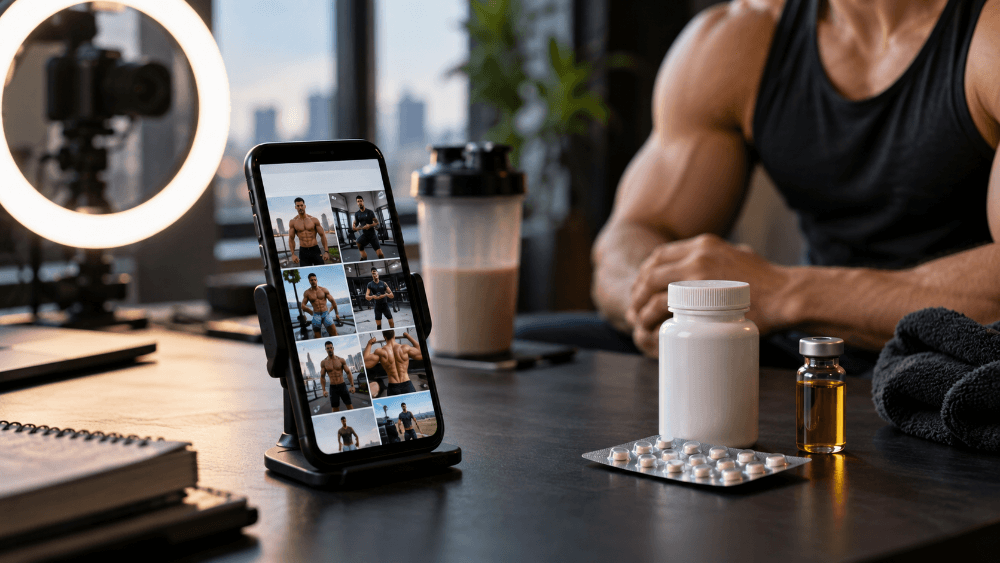
This shift matters because social media can make risky drug use look normal. A muscular influencer may show workouts, meals, supplements, lifestyle habits, and physique updates while avoiding clear discussion of drug use. Meanwhile, followers may compare their natural progress to enhanced physiques and assume they simply need more discipline, a better program, or the “right” product.
Therefore, the modern steroid market is not only about substances. It is also about attention, trust, body image, online status, and direct access. The old model depended heavily on in-person connections. The new model often blends fitness content, influencer credibility, off-platform messaging, wellness branding, and unregulated products.
Quick Answer: How Is The Performance-Enhancing Drug Market Changing?
The performance-enhancing drug market is changing because social media has made steroids, SARMs, peptides, growth hormone, and other enhancement products easier to discuss, promote, and discover. Influencers can build trust through fitness content, then push audiences toward private channels, affiliate-style sales, coaching groups, or off-platform communities.
Additionally, online markets now blur the line between legal and illegal products. Some products appear as supplements. Others appear as “research chemicals,” “peptides,” or “wellness” tools. However, many carry real health risks, and some may contain hidden or undeclared drug ingredients.
The biggest change is visibility. Performance-enhancing drugs are no longer only part of elite bodybuilding culture. They now reach recreational lifters, teenagers, combat-sport fans, casual gym-goers, and people chasing body transformations.
Why Influencers Matter In The Steroid Conversation
Influencers matter because they turn bodies into proof. When a creator has a highly muscular or extremely lean physique, followers may see that appearance as proof the creator understands training, nutrition, supplements, and enhancement. This can create powerful trust.
However, that trust can become risky. An influencer may not have medical training, product-testing knowledge, or legal accountability. Yet, followers may still treat their advice as expert guidance.
Additionally, influencers often sell more than information. They may sell coaching, meal plans, supplement codes, private memberships, paid communities, or indirect product access. As a result, the line between education and marketing can become unclear.
This is especially important with steroids and other PEDs because the consequences can include hormone disruption, heart risks, liver damage, fertility problems, mood changes, infections from unsafe injection practices, and legal trouble.
How Social Media Normalizes PED Use
Social media normalizes PED use through repetition and aesthetics. If users repeatedly see extreme physiques, transformation claims, steroid jokes, “cycle” language, and coded comments, the topic begins to feel ordinary. Over time, risk can feel smaller simply because the content becomes familiar.
Algorithms can make this stronger. When someone watches bodybuilding, strength, fat-loss, or transformation content, platforms often recommend more similar material. As a result, a viewer can move from general fitness advice to more extreme physique content without actively searching for drugs.
Moreover, short-form content removes context. A 30-second video can show a dramatic body transformation, but it may not show bloodwork, side effects, fertility concerns, anxiety, acne, blood pressure, or post-cycle health issues. As a result, users may see the reward while missing the cost.
The Move From Gym Networks To Digital Markets
Historically, many people accessed steroids through gym contacts, coaches, teammates, or local networks. Those pathways still exist. However, digital spaces have changed the market.
Now, conversations can move from public posts to private messages, encrypted apps, invite-only groups, and off-platform communities. This lets sellers and promoters use mainstream visibility while keeping transactions or product details out of public view.
Recent investigative reporting has described how fitness influencers and wellness-linked accounts can connect public social media credibility with underground online drug networks. That matters because audiences may not recognize when a fitness personality has crossed from motivation to drug promotion.
Digital markets can also move fast. Products, group names, accounts, and channels can disappear and reappear. As a result, consumers may face limited accountability and uncertain product quality.
Why “Research Chemical” And “Wellness” Labels Are Misleading
The modern PED market often uses soft language. Products may appear under labels such as “research,” “wellness,” “optimization,” “recovery,” “biohacking,” or “performance support.” These words can make powerful substances sound cleaner or more scientific.
However, a label does not prove safety. A product sold online may contain the wrong dose, contaminated ingredients, hidden drugs, or different compounds than advertised. Furthermore, “not for human consumption” language can serve as a legal shield while still targeting people who intend to use the product.
This is why consumers should be cautious with products that promise rapid muscle gain, fat loss, hormone changes, or steroid-like effects. The FDA has warned that bodybuilding products marketed with steroid-like claims may contain anabolic steroids, steroid-like substances, or other hidden ingredients. Such products can raise the risk of serious and life-threatening reactions.
SARMs, Peptides And The Expanding PED Category
The conversation no longer centers only on anabolic steroids. Today, social media discussions often include SARMs, peptides, human growth hormone, insulin-related drugs, weight-loss medications, thyroid drugs, stimulants, and other compounds.
This expansion matters because many users do not consider these substances “steroids.” However, they can still affect hormones, metabolism, organs, and long-term health. For example, the FDA has warned that SARMs are not approved and may increase the risk of heart attack, stroke, liver injury, and other serious problems.
Additionally, mixing multiple products can make risks harder to predict. A person may combine stimulants, fat-loss drugs, hormone products, and supplements without medical monitoring. As a result, symptoms may become harder to trace, and side effects may become more dangerous.
Body Image Pressure And Young Men
Social media has intensified body comparison, especially among boys and men who consume content focused on muscularity. Many users now see elite physiques daily, often without clear disclosure of enhancement. This can distort expectations.
A natural beginner may compare himself to an enhanced influencer with years of training, ideal lighting, editing, coaching, and drug support. As a result, normal progress may feel too slow. That frustration can push users toward shortcuts.
Additionally, steroid content often ties muscle to confidence, masculinity, discipline, and status. When that message reaches young viewers, it can turn enhancement into a self-worth issue. Consequently, public-health discussions now treat PED visibility as more than a sports problem. It is also a body-image and mental-health issue.
Health Risks That Influencer Content Often Leaves Out
Influencer content often highlights strength, leanness, confidence, and transformation. However, it may leave out the health risks.
Possible risks linked with anabolic steroid misuse include:
- Hormone suppression
- Fertility problems
- Acne and hair loss
- Mood changes or aggression
- Blood pressure changes
- Liver problems, especially with some oral steroids
- Heart and cholesterol risks
- Breast tissue growth in men
- Infection risks from unsafe injections
- Withdrawal symptoms after stopping
Additionally, counterfeit or contaminated products can create extra dangers. If a product comes from an underground lab or an unverified online seller, users may not know what they are taking.
Why Regulation Struggles To Keep Up
Regulators face a difficult problem because social media and underground markets change quickly. Sellers can use coded language, private channels, temporary accounts, and cross-platform movement. Meanwhile, influencers can present themselves as fitness educators while avoiding direct public sales language.
Platforms can remove some content, but enforcement remains inconsistent. Users often learn to bypass restrictions by changing spellings, using emojis, avoiding direct product names, or moving conversations into private groups.
As a result, public education becomes essential. People need to recognize warning signs before they enter the sales funnel.
Warning Signs Readers Should Notice
Readers should be cautious when fitness content includes:
- Unrealistic transformation claims
- “DM me” replies to drug-related questions
- Private group invitations
- Research-chemical language
- No medical supervision discussion
- Claims that side effects are easy to manage
- Product links tied to hormone or steroid-like effects
- Influencers who sell secrecy, not education
- Before-and-after photos without context
- Advice that discourages doctors or bloodwork
These signals do not prove illegal activity, but they should make viewers pause.

Final Thoughts
Steroids, influencers, and social media have changed the performance-enhancing drug market by making PED culture more visible, more casual, and more accessible. The modern market no longer depends only on gym contacts. It can now move through videos, comments, private messages, encrypted groups, wellness branding, and influencer trust.
Ultimately, the biggest risk is normalization. When extreme physiques appear daily, and drug talk becomes casual, viewers may underestimate the real costs. A better fitness culture should separate education from promotion, disclose enhancements honestly, protect young audiences, and make health risks as visible as transformation results.