Table of Contents
- Quick Answer: Why Is Clenbuterol So Controversial?
- What Is Clenbuterol?
- Why Bodybuilders Use Clenbuterol During Cutting
- What Recent Human Research Adds To The Debate
- Why “Not A Steroid” Can Be Misleading
- Health Risks Behind The Bodybuilding Controversy
- Why Anti-Doping Rules Keep Clenbuterol In The Spotlight
- Why Online Advice Makes The Risk Worse
- Why The Debate Is Not Going Away
- Final Thoughts
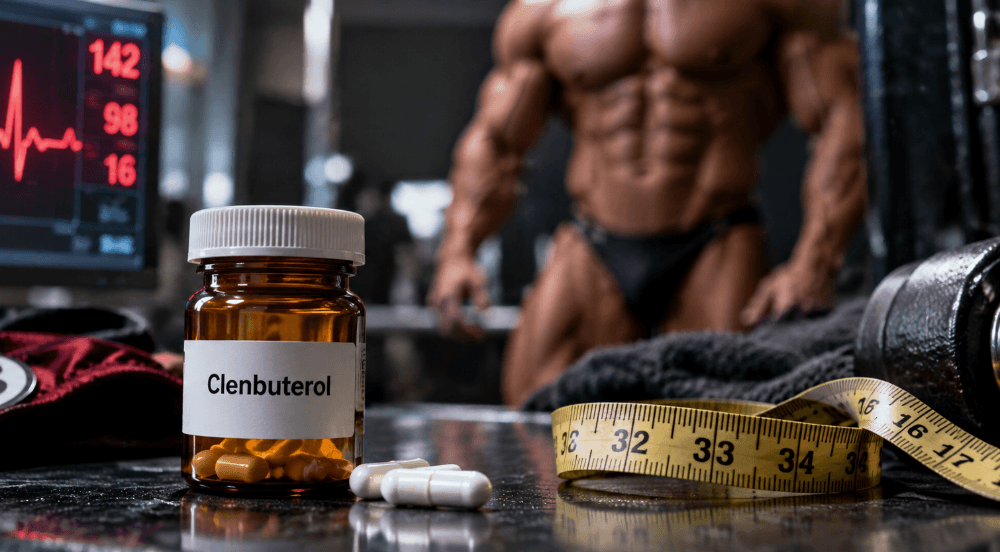
Clenbuterol remains one of the most controversial drugs in the bodybuilding world because it sits at the intersection of fat-loss culture, performance enhancement, health risk, and anti-doping rules. Some bodybuilders discuss it as a cutting aid. Others warn that its risks are far greater than many gym conversations suggest.
The controversy continues because clenbuterol does not fit neatly into one category. It is not an anabolic steroid, yet anti-doping authorities classify it under anabolic agents. It is often promoted for fat loss, yet recent human research suggests its fat-mass benefits may be less impressive than its reputation. Additionally, it can increase heart rate, cause tremors, lower potassium, and create serious cardiovascular concerns.
Therefore, the bodybuilding debate is not only about whether clenbuterol “works.” It is also about what it costs, how people use it, and why online advice often ignores medical risk.
Quick Answer: Why Is Clenbuterol So Controversial?
Clenbuterol is controversial in bodybuilding because people associate it with cutting, leanness, and muscle-preserving effects, but it carries serious safety, legal, and anti-doping concerns. It is not approved for human use in the United States, and poison-control guidance links it with rapid heart rate, palpitations, tremors, anxiety, low potassium, and elevated blood sugar.
Moreover, clenbuterol is prohibited in sport. WADA’s Prohibited List includes clenbuterol under “other anabolic agents,” which means tested athletes can face consequences for its presence in a sample.
At the same time, newer human research shows why the debate persists. A 2026 randomized controlled trial found that clenbuterol increased lean mass and strength gains during resistance training, but fat-mass reduction did not differ from placebo, and many gains faded after discontinuation and detraining.
What Is Clenbuterol?
Clenbuterol is a long-acting beta-2 adrenergic agonist. Drugs in this broader category can affect airway smooth muscle, which explains why related medications appear in respiratory medicine. However, clenbuterol also affects other tissues, including skeletal muscle, the heart, and metabolism.
In bodybuilding culture, people often discuss clenbuterol as a “fat burner” or cutting drug. However, that label oversimplifies the pharmacology. Clenbuterol can stimulate the nervous system, raise heart rate, and alter metabolic signaling. As a result, the same properties that attract bodybuilders can also create risk.
Product quality also creates another problem. Some people buy clenbuterol through unregulated online channels. That adds uncertainty around dose, purity, contamination, and labeling. Therefore, the danger does not only come from the drug itself. It also comes from the market where many users obtain it.
Why Bodybuilders Use Clenbuterol During Cutting
Bodybuilders often discuss clenbuterol during cutting phases, when the goal is to reduce body fat while maintaining muscle fullness and training output. In that context, clenbuterol appeals because it’s known for thermogenic effects, appetite changes, and a “harder” look.
However, cutting already stresses the body. Calories drop, training remains intense, sleep may suffer, and stimulant use may increase. As a result, adding clenbuterol can compound cardiovascular and nervous-system strain.
The controversy grows because bodybuilding rewards visual outcomes. A drug that appears to help a competitor look leaner may gain popularity even when it raises health risks. Moreover, online transformation photos rarely show blood pressure, heart rhythm, potassium levels, anxiety symptoms, or emergency-room visits.
What Recent Human Research Adds To The Debate
For years, much of the clenbuterol conversation relied on animal studies, anecdotes, and bodybuilding forums. However, recent human research adds more nuance.
The 2026 resistance-training study found that clenbuterol increased lean mass by about 1.7 kg more than placebo during 8 weeks of supervised training. It also increased gains in bench press and leg press strength. However, fat-mass reduction did not differ significantly between clenbuterol and placebo.
This finding matters because many bodybuilders frame clenbuterol mainly as a fat-loss drug. Yet in this study, the more notable effects involved lean mass and strength, not superior fat loss.
Furthermore, the same study found that many of the early gains faded after participants stopped clenbuterol and completed a detraining period. Therefore, the results do not support a simple “take it and keep the gains” narrative.
Why “Not A Steroid” Can Be Misleading
Many users argue that clenbuterol is less serious because it is not a steroid. Technically, clenbuterol is not an anabolic-androgenic steroid. However, that does not make it safe.
This distinction creates confusion. Since clenbuterol does not carry the word “steroid,” some users underestimate it. However, WADA lists clenbuterol among prohibited anabolic agents, and recent human data show that it can affect lean mass and strength.
Therefore, “not a steroid” should not become “not a powerful drug.” Clenbuterol can still affect the cardiovascular system, nervous system, metabolism, and athletic integrity.
Health Risks Behind The Bodybuilding Controversy
The most serious controversy involves health. Clenbuterol can cause rapid heart rate, palpitations, tremors, anxiety, low potassium, and elevated blood sugar. Poison Control also warns that severe poisoning can involve dangerous symptoms and that some cases may go unreported because people fear seeking care.
For bodybuilders, these risks may increase during cutting. Dehydration, low carbohydrate intake, stimulant stacking, sauna use, diuretics, and intense training can all worsen cardiovascular stress. Additionally, low potassium can affect muscle and heart electrical activity, which makes it especially concerning.
Warning Signs May Include:
- Fast or irregular heartbeat
- Chest discomfort
- Severe tremors or anxiety
- Dizziness or fainting
- Shortness of breath
- Muscle weakness or cramping
- Severe headache
- Confusion or unusual agitation
Anyone with concerning symptoms after clenbuterol exposure should seek urgent medical help.
Why Anti-Doping Rules Keep Clenbuterol In The Spotlight
Clenbuterol also remains controversial because it appears in doping cases. Athletes can face serious consequences after a positive test, even when they claim accidental exposure.
At the same time, meat contamination complicates the issue. USADA notes that clandestine use of clenbuterol as a livestock bulking agent has occurred in some regions, including China, Mexico, Guatemala, and possibly parts of Latin and South America.
WADA has also addressed meat-contamination cases. A WADA stakeholder notice explained that certain low-level findings for substances such as clenbuterol may trigger investigation as atypical findings when contamination may explain the result.
As a result, clenbuterol sits in a difficult space. It can indicate intentional misuse, yet contamination cases can happen. That tension keeps the drug visible in sports news, bodybuilding discussions, and anti-doping debates.
Why Online Advice Makes The Risk Worse
Online bodybuilding advice often turns clenbuterol into a protocol rather than a medical risk. Forums and social media may discuss cycles, stacking, and side-effect management in casual language. However, this creates a false sense of control.
The problem is that users rarely know their exact product strength, cardiovascular status, potassium level, or individual sensitivity. Additionally, they may combine clenbuterol with caffeine, thyroid drugs, anabolic steroids, SARMs, diuretics, or other stimulants. As a result, the risk profile can change quickly.
Moreover, online advice often focuses on “how to tolerate” side effects rather than whether they signal harm. Tremors, palpitations, and anxiety are not proof that the drug is working well. They may signal that the body is under excessive stress.
Why The Debate Is Not Going Away
The controversy will likely continue because clenbuterol produces effects that the bodybuilding world values: visible leanness, possible lean-mass changes, and a reputation for cutting. However, the same drug also raises safety risks, anti-doping concerns, and legal problems.
Additionally, newer human studies may fuel both sides of the debate. Supporters may point to lean-mass and strength findings. Critics may point to limited fat-loss benefits, gains that fade after discontinuation, side effects, and cardiovascular risks.
Therefore, the most accurate view sits in the middle: clenbuterol can affect the body, but that does not make it safe, sustainable, or appropriate for unsupervised bodybuilding use.

Final Thoughts
Clenbuterol remains controversial in bodybuilding because it offers the promise of physique enhancement while carrying serious trade-offs. Recent human research suggests it can increase lean mass and strength during resistance training, but it does not clearly outperform placebo for fat-mass loss, and many gains may fade after stopping.
Meanwhile, health risks remain central. Rapid heart rate, palpitations, tremors, anxiety, low potassium, and cardiovascular strain make clenbuterol far more serious than a typical “fat burner.” Anti-doping rules and contamination concerns also keep it in the public spotlight.
Ultimately, clenbuterol’s controversy comes from the gap between what bodybuilding culture wants and what medical safety allows. It may change performance or physique markers, but those changes can come with risks that no stage-ready look can erase.