Table of Contents
- Quick Answer: What Is Progressive Overload?
- Why Progressive Overload Builds Muscle
- The Main Ways To Apply Progressive Overload
- Weight Progression: The Most Obvious Method
- Rep Progression: The Bodybuilder’s Best Friend
- Volume Progression: More Work Over Time
- Effort And Reps In Reserve
- Exercise Selection For Progressive Overload
- Building A Weekly Muscle-Growth Program
- Nutrition Supports Progressive Overload
- Recovery: The Missing Half Of Overload
- Common Progressive Overload Mistakes
- Final Thoughts

Progressive overload is one of the most important principles in bodybuilding. To build muscle, your body needs a reason to adapt. That reason comes from training stress that gradually increases over time.
However, progressive overload does not mean adding weight every workout forever. It means giving your muscles a slightly greater challenge as they become stronger and more skilled. Sometimes that means more weight. Other times, it means more reps, better form, longer range of motion, more total sets, or improved control.
Therefore, an effective muscle-growth program should combine hard training with smart progression. It should also include enough food, protein, sleep, and recovery. Without recovery, overload becomes fatigue. With the right structure, however, overload becomes growth.
Quick Answer: What Is Progressive Overload?
Progressive overload means gradually increasing the training demand placed on the body so muscles continue adapting. In bodybuilding, the goal is usually hypertrophy, or muscle growth. Therefore, progressive overload should target muscle tension, training volume, effort, and execution quality.
A simple example is adding one rep to a set this week, then adding a small amount of weight once you reach the top of your rep range. Another example is using the same weight with better control, deeper range of motion, and more consistent technique.
The key idea is progression over time, not maximum effort every session.
Why Progressive Overload Builds Muscle
Muscle growth happens when resistance training creates enough mechanical tension and training stress to stimulate adaptation. When you lift, muscle fibers experience tension. Then, with enough nutrition and recovery, the body repairs and builds tissue so it can handle similar stress better in the future.
Research and position stands consistently identify progressive resistance training as a key driver of improvements in muscle size, strength, power, and function. The American College of Sports Medicine’s updated position stand states that healthy adults should perform progressive resistance training to improve muscle function, size, and physical performance.
However, the body adapts to repeated stress. If you lift the same weight for the same reps with the same effort for months, your muscles eventually receive less growth stimulus. Therefore, your program needs planned progression.
The Main Ways To Apply Progressive Overload
Many beginners think overload only means adding weight. However, bodybuilding uses several progression tools.
You can overload by increasing:
- Weight on the bar or machine
- Reps with the same weight
- Sets for a muscle group
- Range of motion
- Exercise control and technique
- Training density by doing the same work in less time
- Exercise difficulty
- Weekly training volume
- Effort level, measured by reps in reserve
Because hypertrophy depends on both tension and volume, small improvements across several variables can produce excellent progress. For example, adding two reps across three sets may create a useful overload even if the weight stays the same.
Weight Progression: The Most Obvious Method
Adding weight is the clearest form of progressive overload. If you bench press 185 pounds for 8 reps and later press 195 pounds for 8 reps with similar form, you have progressed.
However, weight increases work best when technique stays stable. If you add weight but shorten the range of motion, bounce the bar, or use poor control, the target muscle may not receive a better stimulus. Instead, you may simply shift stress to joints or other muscles.
Therefore, use small jumps when possible. Dumbbells, cable stacks, and machines may require larger jumps, so rep progression can help bridge the gap.
Rep Progression: The Bodybuilder’s Best Friend
Rep progression works especially well for hypertrophy. For example, choose a rep range such as 8 to 12 reps. Start with a weight you can lift for 8 controlled reps. Then, over several sessions, work toward 12 reps. Once you can complete all sets at the top of the range with good form, increase the weight slightly and repeat.
This method works because it rewards real performance improvement. Additionally, it reduces the pressure to add weight before the muscle is ready.
A simple progression might look like this:
| Week | Dumbbell Press Performance |
|---|---|
| 1 | 3 Sets Of 8 Reps |
| 2 | 3 Sets Of 9 Reps |
| 3 | 3 Sets Of 10 Reps |
| 4 | 3 Sets Of 11–12 Reps |
| 5 | Add Weight And Return To 8–9 Reps |
This approach gives your program direction without forcing reckless jumps.
Volume Progression: More Work Over Time
Training volume is often the number of hard sets you perform per muscle group per week. Volume matters because more quality work can create more growth stimulus. A meta-analysis by Schoenfeld and colleagues found a graded dose-response relationship, where higher weekly resistance-training volume produced greater muscle hypertrophy gains.
However, volume has a limit. More sets help only when you can recover from them. If extra sets reduce performance, increase joint pain, or hurt sleep, they may create fatigue rather than growth.
A smart program may start with moderate volume, such as 8 to 12 hard sets per muscle group per week, then increase gradually if recovery and performance remain strong. Advanced bodybuilders may need more volume, but beginners often grow with less.
Effort And Reps In Reserve
Effort matters because easy sets rarely build much muscle. However, training to complete failure on every set can create too much fatigue. A useful tool is reps in reserve (RIR).
If you finish a set and could have done two more good reps, that set is 2 RIR. Many hypertrophy sets work well around 0 to 3 RIR. This means the set feels hard, but technique still stays controlled.
Failure can be useful sometimes, especially on safer isolation exercises such as lateral raises or curls. However, constant failure on heavy compound lifts can quickly overload recovery. Therefore, use effort strategically.
Exercise Selection For Progressive Overload
The best exercises for progressive overload are stable, repeatable, and easy to track. Squats, presses, rows, Romanian deadlifts, pulldowns, leg presses, cable exercises, and machine movements all work well when they fit your body.
Compound lifts let you move more load and train several muscles at once. Meanwhile, isolation exercises help target specific muscles and add volume without as much systemic fatigue.
For bodybuilding, you do not need to prove strength on every lift. You need exercises that let you load the target muscle safely over time. Therefore, an exercise that feels great and progresses steadily may beat a “classic” lift that causes pain or poor technique.
Building A Weekly Muscle-Growth Program
A good program trains each major muscle group often enough and with enough volume to grow, while leaving room for recovery. Many bodybuilders train each muscle twice a week because it spreads volume across sessions and improves practice.
Here is a simple example:
| Day | Focus |
|---|---|
| Monday | Upper Body Push |
| Tuesday | Lower Body |
| Wednesday | Rest Or Light Cardio |
| Thursday | Upper Body Pull |
| Friday | Lower Body And Arms |
| Saturday | Weak Points Or Optional Pump Work |
| Sunday | Rest |
This structure gives the athlete several chances to overload exercises across the week. However, beginners can use three full-body sessions, while advanced lifters may prefer push-pull-legs or body-part splits.
Nutrition Supports Progressive Overload
Progressive overload works better when nutrition supports training. Protein provides amino acids for muscle repair and growth. The International Society of Sports Nutrition states that many exercising individuals benefit from about 1.4 to 2.0 grams of protein per kilogram of body weight per day to support training adaptations.
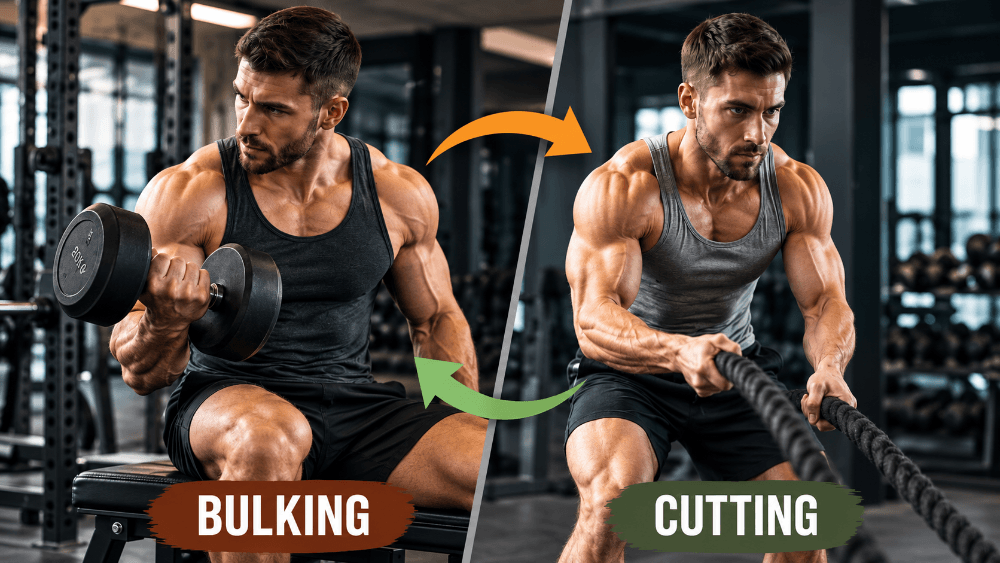
Calories also matter. During a muscle-gain phase, a moderate calorie surplus can support performance and recovery. However, a huge surplus usually adds unnecessary fat. During a cut, progressive overload becomes harder, so the goal may shift toward maintaining strength and muscle rather than setting new records every week.
Carbohydrates help fuel hard training, especially higher-volume bodybuilding sessions. Hydration and electrolytes also support performance, pumps, and overall training quality.
Recovery: The Missing Half Of Overload
Progressive overload only works if the body can recover. Sleep, rest days, stress management, and deloads all help convert training stress into adaptation.
If performance drops for several weeks, soreness never fades, motivation crashes, or joints ache constantly, your program may need less volume or a deload. A deload reduces training stress for several days or a week, then allows performance to rebound.
Therefore, recovery is not laziness. It is part of the program.
Common Progressive Overload Mistakes
Many lifters stall because they chase overload too aggressively or track the wrong things.
Common mistakes include:
- Adding weight while form gets worse
- Changing exercises too often
- Training to failure on every set
- Increasing volume before recovery can handle it
- Ignoring sleep and nutrition
- Comparing progress to enhanced athletes online
- Expecting weekly strength gains forever
- Treating soreness as the only sign of growth
A better approach focuses on steady, measurable progress over months.
Final Thoughts
Progressive overload drives an effective bodybuilding program. However, it works best when lifters understand that overload includes more than weight. Reps, sets, technique, range of motion, effort, and consistency all matter.
Ultimately, the goal is to create a repeatable training system that challenges the muscles, supports recovery, and improves over time. Train hard, track your lifts, eat enough protein, sleep well, and make small improvements whenever possible. That is how progressive overload turns regular workouts into a real muscle-growth program.