Table of Contents
- Quick Answer: What Is The Difference Between Cutting And Bulking?
- What Is Bulking?
- What Is Cutting?
- Why Bodybuilders Use Phases
- A Typical Bodybuilding Year
- How Training Changes During A Bulk
- How Training Changes During A Cut
- How Nutrition Changes Between Bulking And Cutting
- What Maintenance Phases Do
- Common Mistakes During Bulking
- Common Mistakes During Cutting
- Final Thoughts
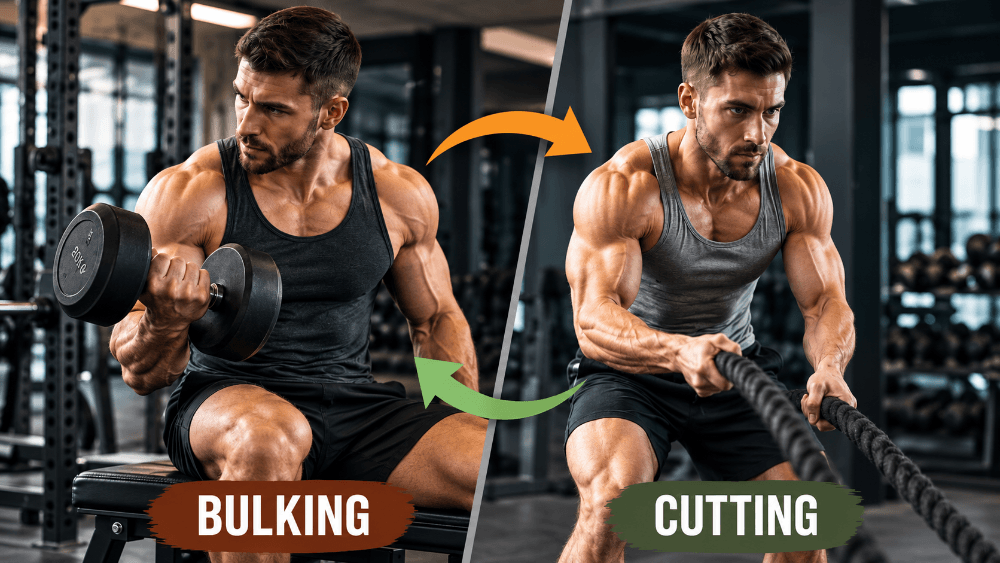
Bodybuilding programs change throughout the year because physique goals change. At one point, the goal may be to build new muscle. Later, the goal may shift toward losing body fat while keeping as much muscle as possible. This is where cutting and bulking come into play.
Bulking means eating in a controlled calorie surplus while training for muscle growth. Cutting means eating in a calorie deficit while training to preserve muscle and reveal more definition. However, smart bodybuilding plans include more than simply “eat more” or “eat less.” They also include maintenance phases, deloads, cardio changes, recovery management, and sometimes contest preparation.
Therefore, understanding cutting vs. bulking helps athletes avoid random dieting. Instead of changing calories every few days, bodybuilders use phases to match nutrition, training, and recovery with a clear goal.
Quick Answer: What Is The Difference Between Cutting And Bulking?
Bulking focuses on gaining muscle by combining resistance training with a calorie surplus. Cutting focuses on reducing body fat by combining resistance training with a calorie deficit, keeping protein high, and managing fatigue.
During a bulk, bodybuilders usually increase calories, push training performance, and accept some fat gain. During a cut, they reduce calories, add or adjust cardio, maintain heavy resistance training when possible, and aim to keep muscle.
However, neither phase should last forever. A complete bodybuilding year often moves through bulking, maintenance, cutting, peak preparation, and recovery phases.
What Is Bulking?
Bulking is a muscle-gain phase. During this period, a bodybuilder eats more calories than they burn so the body has enough energy to support hard training, recovery, and muscle growth. However, a good bulk does not mean uncontrolled overeating.
A controlled bulk usually uses a moderate calorie surplus. Many athletes aim to gain weight slowly because fast weight gain often adds unnecessary fat. Training performance also becomes a major focus. Bodybuilders track lifts, volume, reps, and progress by muscle group to ensure the surplus supports real growth.
Protein remains important during a bulk, but carbohydrates also play a major role. Carbs support training performance, refill muscle glycogen, and help athletes handle higher-volume workouts. Fats also support hormone production and overall health. Therefore, the best bulking diet balances all three macronutrients instead of relying only on protein.
What Is Cutting?
Cutting is a fat-loss phase. During a cut, the bodybuilder eats fewer calories than they burn. As a result, the body uses stored energy, and body fat gradually decreases.
However, cutting creates a challenge: the athlete wants to lose fat, not muscle. Therefore, resistance training stays central. Protein intake usually stays high, and the calorie deficit shouldn’t become so aggressive that recovery collapses.
As body fat drops, cutting gets harder. Hunger rises, training energy may drop, sleep can suffer, and mood may change. Additionally, research on natural bodybuilding contest preparation shows that lean athletes face a higher risk of losing fat-free mass when body fat gets very low. Because of this, many coaches use slower cuts near the end of contest prep.
Why Bodybuilders Use Phases
Bodybuilders use phases because building muscle and losing fat require different conditions. Muscle gain usually benefits from more food, progressive training, and strong recovery. Fat loss requires an energy deficit. Trying to maximize both at the same time can work for beginners or detrained lifters, but advanced athletes often need more focused phases.
Phases also help prevent burnout. For example, staying in a calorie deficit all year can reduce performance and increase fatigue. On the other hand, bulking all year may add more fat than the athlete wants. Therefore, planned transitions keep progress more controlled.
A yearly plan also helps athletes prepare for competitions, photoshoots, sports seasons, or personal physique goals. Instead of reacting emotionally to the scale or mirror, they follow a structure.
A Typical Bodybuilding Year
A bodybuilding year can look different depending on goals, competition dates, and experience level. However, many programs follow a pattern like this:
| Phase | Main Goal | Common Focus |
|---|---|---|
| Off-Season Bulk | Build muscle | Calorie surplus, progressive overload, recovery |
| Maintenance | Stabilize body weight | Hold progress, reduce fatigue, prepare for next phase |
| Cutting Phase | Lose body fat | Calorie deficit, high protein, cardio management |
| Peak Or Final Prep | Refine appearance | Fine-tune food, training, recovery, and presentation |
| Post-Cut Recovery | Restore performance | Gradually increase calories and reduce fatigue |
This structure gives each part of the year a purpose. It also lets the athlete train hard when calories are high and protect muscle when they drop.
How Training Changes During A Bulk
During a bulk, training often becomes more aggressive. With higher calories and carbohydrates, bodybuilders can usually handle more volume and push progressive overload more consistently.
A bulking program may include:
- More total weekly sets
- Heavier compound lifts
- Higher training volume for lagging muscles
- More exercise variety
- Fewer cardio demands
- Longer growth-focused blocks
However, more food does not make unlimited training possible. Recovery still matters. If sleep, joint health, or motivation declines, the athlete may need a deload or lower-volume week.
Additionally, a good bulk should track more than body weight. Strength, reps, measurements, photos, and recovery markers can show whether the surplus supports muscle gain or mostly adds fat.
How Training Changes During A Cut
During a cut, training should preserve muscle. Many bodybuilders try to keep lifting heavy enough to signal the body to maintain lean mass. However, you may need to adjust volume because calories are lower and recovery becomes harder.
A cutting program may include:
- Slightly reduced training volume
- Continued heavy sets when safe
- More careful exercise selection
- Less “junk volume”
- Cardio added gradually
- Deloads when fatigue rises
The goal is not to set personal records every week. Instead, the goal is to keep muscle tension high while managing fatigue. If a bodybuilder tries to train like they are in a high-calorie bulk while eating in a large deficit, performance may crash.
How Nutrition Changes Between Bulking And Cutting
Nutrition changes the most between phases. During a bulk, calories rise. During a cut, calories fall. However, protein stays important in both phases.
The International Society of Sports Nutrition states that many exercising individuals benefit from about 1.4 to 2.0 grams of protein per kilogram of body weight per day to support training adaptations. Additionally, research on lean, resistance-trained athletes in a calorie deficit suggests that higher protein intake may help preserve lean mass during cutting.
Carbohydrates often move up during bulking because training volume and performance matter. During cutting, carbs may decrease as calories drop, but many athletes still place carbs around training to support performance. Fats may also shift, but they should not drop too low for long periods because overall health matters.
What Maintenance Phases Do
Maintenance phases often get less attention, but they can make a bodybuilding year more successful. During maintenance, calories roughly match energy needs. The athlete may hold body weight while reducing fatigue, improving digestion, stabilizing hormones, or preparing mentally for the next phase.
For example, after a long cut, maintenance can help restore training performance before another growth phase. Additionally, after a long bulk, maintenance can help the athlete settle before starting a fat-loss phase.
Maintenance also gives athletes time to evaluate progress without the noise of rapid scale changes. Therefore, it can support better decisions.
Common Mistakes During Bulking
Many bulking mistakes come from impatience. Some athletes gain weight too quickly, assuming every pound means muscle. However, muscle growth has limits. A huge surplus often adds more fat than useful lean mass.
Common bulking mistakes include:
- Eating without tracking progress
- Gaining weight too fast
- Ignoring cardio completely
- Training with poor form to chase heavier loads
- Skipping deloads
- Letting sleep and digestion decline
A better bulk stays controlled, performance-focused, and long enough to create measurable progress.
Common Mistakes During Cutting
Cutting mistakes usually come from being too aggressive. A large calorie deficit can drive fast weight loss, but it can also reduce training performance and increase the risk of muscle loss.
Common cutting mistakes include:
- Dropping calories too low too soon
- Adding too much cardio too quickly
- Reducing protein
- Changing training every week
- Chasing scale weight instead of body composition
- Ignoring sleep, mood, and recovery
A better cut uses a sustainable deficit, keeps lifting central, and adjusts slowly based on results.

Final Thoughts
Cutting and bulking are not random diet trends. They are structured bodybuilding phases that help athletes focus on one main goal at a time. Bulking supports muscle gain through a calorie surplus and progressive training. Cutting supports fat loss through a calorie deficit, high protein, resistance training, and careful recovery management.
Ultimately, the best bodybuilding year balances both. Athletes build in the off-season, maintain when needed, cut with patience, and recover after hard phases. When each phase has a clear purpose, bodybuilding becomes less reactive and more strategic.