Table of Contents
- What People Mean By “Thermogenic Stack”
- Why Clen, Yohimbine, And ECA Get Compared In 2026
- Clenbuterol: Why It Shows Up In The “Stack” Conversation
- Yohimbine: Why People Frame It As A “Cleaner” Option
- ECA: Why The Old-School Stack Still Trends
- Why The Comparison Feels Logical (But Often Misleads)
- What Thermogenic Stack Culture Misses In 2026
- A Research-Based Way To Evaluate The “Stack” Debate
- Safer Cutting Strategies That Beat Stack Culture
- Final Thoughts

Thermogenic stacks never truly go away. Instead, they recycle through cutting seasons, social media trends, and bodybuilding forums under new names and new aesthetics. In 2026, three terms still dominate the “aggressive fat loss” conversation: Clen, Yohimbine, and ECA. Although these substances differ in mechanism and legality, many people treat them as interchangeable tools for a single goal—getting lean fast.
However, this comparison usually oversimplifies the science. At the same time, it reveals something important about fitness culture: when fat loss slows, people often chase stimulation rather than strategy. Therefore, the internet frames these compounds as “options” instead of risk-heavy choices with real health consequences.
This article explains why people often compare clenbuterol, yohimbine, and ECA. Additionally, it breaks down what that comparison misses, including the difference between short-term stimulation and sustainable fat loss, the role of product quality, and why “stack culture” can quietly sabotage the very outcome it promises.
What People Mean By “Thermogenic Stack”
“Thermogenic stack” is gym language, not a clinical term. In practice, it refers to combining stimulants or metabolism-influencing compounds to increase energy expenditure, suppress appetite, or boost perceived energy during a cut.
Most stacks aim to deliver:
- Higher daily energy expenditure
- Less hunger during a deficit
- Increased training drive
- A “dry” look through stress-related water shifts
Because dieting feels harder over time, people often view thermogenic stacks as the next step when motivation drops. Therefore, stack culture tends to peak in late-stage cutting, when energy and patience run low.
However, thermogenesis comes with trade-offs. When stimulation rises, heart rate usually rises too. Additionally, when appetite suppression increases, sleep and recovery often suffer. Consequently, stack culture can create new problems while people chase the solution.
Why Clen, Yohimbine, And ECA Get Compared In 2026
These three compounds keep appearing together because they represent a shared cultural narrative.
They Signal “Hardcore Cutting”
In online fitness spaces, “Clen,” “Yohimbine,” and “ECA” function like status symbols. They signal that someone is not just dieting, but dieting aggressively. Therefore, the comparison carries identity value, not just physiological value.
Additionally, influencers often mention them to add edge to transformation content. As a result, audiences begin to treat the terms like standard cutting vocabulary.
They All Affect Adrenergic Pathways
Although their mechanisms differ, all three influence adrenergic signaling. Consequently, they share similar sensations: elevated energy, reduced appetite, sweating, and stimulation.
Because the sensations overlap, people assume the results overlap too. However, “feels similar” does not equal “works the same.” Therefore, comparisons often rely on experience-based impressions rather than physiology.
They Fit The Same Shortcut Story
The internet loves shortcut stories because shortcuts feel exciting. Therefore, these compounds keep returning as part of a predictable narrative:
- “Fat loss stalled.”
- “Add a thermogenic.”
- “Get shredded fast.”
Even if the narrative ignores long-term outcomes, it still spreads because it fits the algorithm.
Clenbuterol: Why It Shows Up In The “Stack” Conversation
Clenbuterol is a beta-2 adrenergic agonist. In some contexts, beta-2 agonists help with bronchodilation. However, clenbuterol also produces strong systemic stimulation, which explains why it appears in cutting discussions.
People describe clenbuterol as “thermogenic” because it can:
- increase sympathetic stimulation
- raise heart rate and perceived energy
- create sweating and heat production
- suppress appetite in some cases
However, clenbuterol carries a significant safety profile. Public safety sources warn that clenbuterol is unapproved for human use in the U.S. and can cause toxicity even at low doses, including tremors, tachycardia, hypokalemia, hyperglycemia, seizures, and cardiac arrest. Additionally, symptoms can last from 1 to 8 days, which means adverse effects may persist far longer than most stimulants.
Therefore, clenbuterol stays in the comparison because it produces noticeable effects. Yet that same intensity also makes it one of the highest-risk compounds mentioned in cutting culture.
Yohimbine: Why People Frame It As A “Cleaner” Option
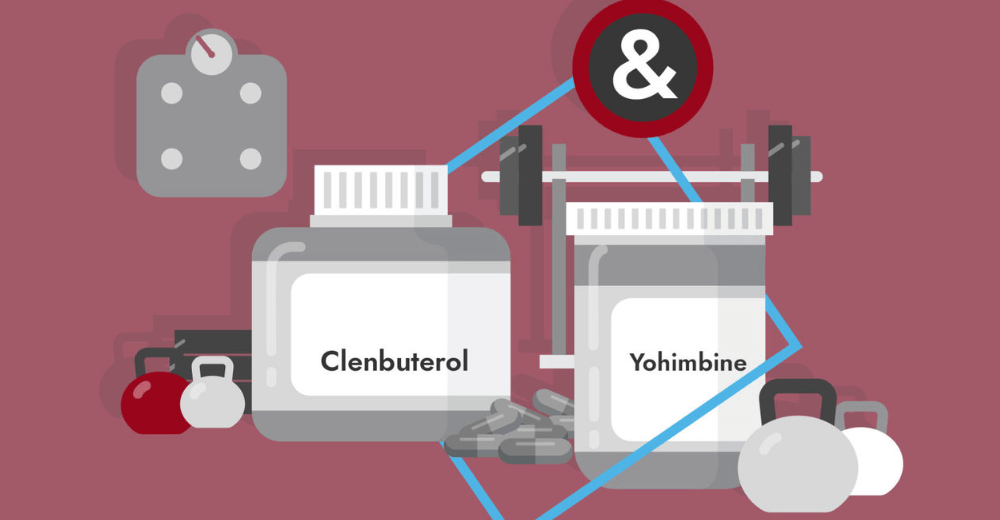
Yohimbine, often discussed through yohimbe supplements, influences adrenergic signaling differently than clenbuterol. It is usually promoted as a treatment for “stubborn fat” because people associate it with alpha-2 receptor pathways and fat mobilization under certain physiological conditions.
However, the “cleaner alternative” framing often ignores safety warnings.
NCCIH reports that yohimbine has been associated with serious adverse effects, including cardiac arrhythmia, blood pressure problems, heart attacks, and seizures. Additionally, NCCIH emphasizes that supplement labels often list inaccurate amounts, which makes real-world exposure unpredictable.
So, yohimbine stays in the comparison because it feels like a supplement-based solution. However, it still carries meaningful risk, especially when combined with caffeine, dehydration, or anxiety-prone states.
ECA: Why The Old-School Stack Still Trends
ECA stands for ephedrine, caffeine, and aspirin. It became famous because ephedrine and caffeine can increase energy expenditure and suppress appetite, and because early research showed modest short-term weight-loss benefits.
The NIH Office of Dietary Supplements notes that ephedrine and ephedrine plus caffeine were associated with modest but statistically significant increases in short-term weight loss. However, safety concerns escalated. Consequently, the FDA banned dietary supplements containing ephedra in 2004 because they posed an unreasonable risk of illness or injury.
Therefore, ECA stays popular for two reasons. First, it has a “research-backed” reputation. Second, it carries a rebellious legacy in cutting culture. Yet that same legacy exists because harm occurred at scale.
Why The Comparison Feels Logical (But Often Misleads)
The comparison feels intuitive because the sensations overlap. However, the risks and mechanisms do not match cleanly.
Different Mechanisms Create Different Risk Patterns
- Clenbuterol: beta-2 agonism with prolonged stimulation
- Yohimbine: adrenergic modulation with anxiety and cardiovascular risks
- ECA: mixed stimulant effects tied to ephedrine and caffeine pathways
Because each pathway affects different receptors, the body responds differently. Therefore, treating them as equivalent tools creates a false sense of confidence.
“Stronger” Often Means “Less Predictable”
Cutting culture equates intensity with effectiveness. However, intensity also increases unpredictability.
Clenbuterol can produce prolonged symptoms.
Yohimbine exposure varies due to labeling inaccuracies.
ECA carries a long history of widespread harm.
So, while all three feel “hardcore,” they do not consistently produce outcomes that justify the risks. they take
What Thermogenic Stack Culture Misses In 2026
This is the most important part of the conversation. The cultural narrative usually omits the reality that shapes outcomes.
Stacking Often Damages Sleep And Recovery
When stimulant load rises, sleep often worsens. However, sleep influences hunger, recovery, and training performance. Therefore, stimulation can indirectly undermine fat loss.
So, people may lose water weight and feel “dry,” yet their long-term progress suffers.
Stack Results Often Come From Water Shifts
Many fast-shred transformations involve:
- glycogen depletion
- Reduced sodium or inconsistent sodium
- dehydration and heavy sweating
- cortisol-driven changes in water retention
Therefore, a tighter look may reflect stress and water manipulation rather than true fat loss.
Product Quality Issues Now Drive Risk
Many modern fat-loss supplements contain complex blends. Some also contain undisclosed stimulants or pharmaceutical substances. The FDA warns consumers about tainted weight-loss products and hidden drug ingredients.
Therefore, even someone avoiding clenbuterol still faces adulteration risk.
A Research-Based Way To Evaluate The “Stack” Debate
Instead of asking which stack works, ask questions that protect your health and results.
- What creates the most consistent deficit with the least stress?
- What happens to sleep when stimulation rises?
- How predictable is the product content and labeling?
- How long do adverse effects last if something goes wrong?
- What happens to training performance when appetite and recovery crash?
When you ask these questions, the “stack” conversation changes. Instead of chasing intensity, you start building sustainability.
Safer Cutting Strategies That Beat Stack Culture
A lean physique requires consistency, not extremes. Therefore, the best cutting strategies look boring but work reliably.
Use A Moderate Deficit And Stay Performance-Focused
Moderate deficits preserve training performance. Additionally, stable performance improves muscle retention. Therefore, you get leaner without shrinking dramatically.
Increase Steps Before Adding Stress
Steps provide low-impact energy expenditure. Consequently, they improve fat loss outcomes without the recovery cost of high-intensity cardio.
Keep Protein High And Sleep Consistent
Protein supports satiety and muscle retention. Meanwhile, sleep regulates hunger hormones and recovery capacity. Therefore, sleep protection is a fat-loss tool.
Track Trends, Not Emotion
Use weekly weight trends, waist measurements, and gym performance to guide your cut. As a result, you avoid the emotional trap that drives stimulant escalation.

Final Thoughts
People compare clen, yohimbine, and ECA in 2026 because they symbolize “hardcore cutting” and because they share adrenergic stimulation. However, the comparison often misses the most important reality: risk rises faster than results when stimulant intensity increases.
Clenbuterol carries a prolonged toxicity risk and serious cardiovascular and electrolyte effects that can last up to a week. Yohimbine carries a serious adverse event history and labeling uncertainty in supplements. ECA carries a legacy shaped by measurable short-term weight loss signals alongside regulatory bans due to harm.
Therefore, the best takeaway is simple: sustainable cutting relies on manageable deficits, consistent training, and strong recovery—not aggressive stimulation.